
Mental Balance in a Fast-Moving World
Mental Balance as an Inner Anchor Mental balance is a gentle inner anchor that allows the mind to remain clear, steady, and receptive even as the world moves quickly. It is not about slowing everything outside, but about creating a calm center within. Traditional wisdom often spoke of balance as harmony between thought, feeling, and action, suggesting that when the inner world is aligned, the outer world feels manageable. Modern understanding supports this insight by showing how mental balance strengthens focus, learning capacity, and emotional clarity. In a time shaped by rapid information flow and intelligent systems that respond instantly, mental balance becomes a deeply human strength. When balance lives within, clarity remains available, allowing learning and understanding to unfold naturally. Over time, this inner anchor supports thoughtful progress, helping the mind stay present and engaged without feeling scattered.
1/10/2026
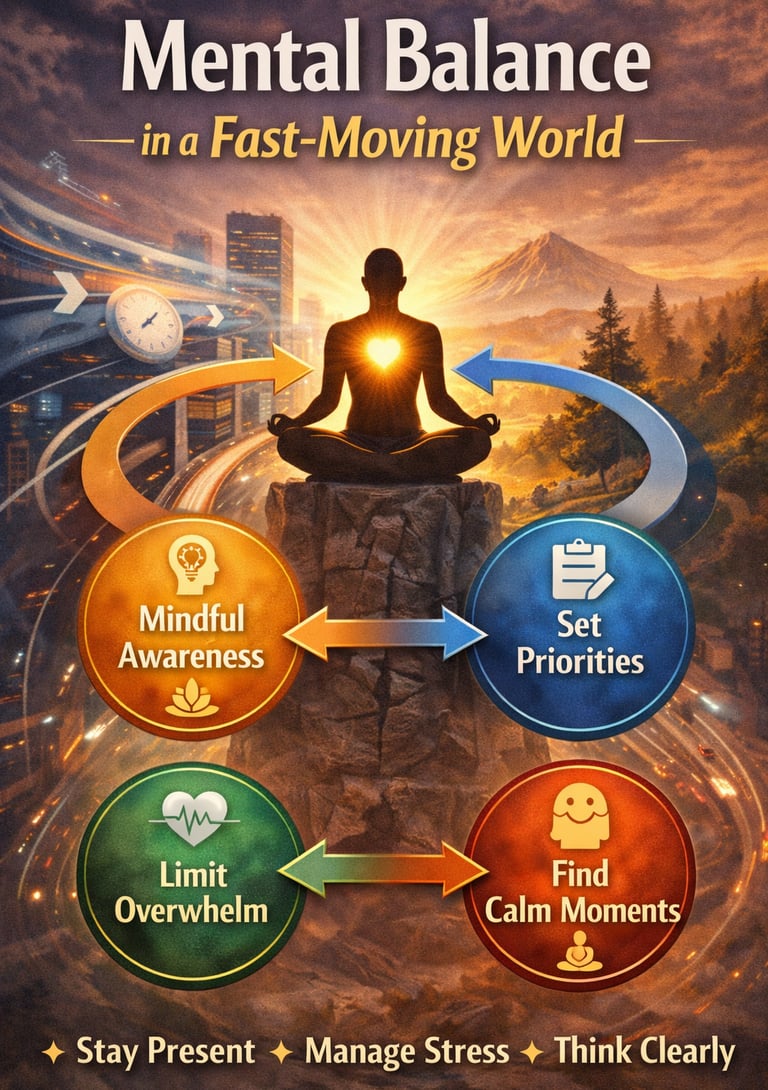
Mental Balance in a Fast-Moving World
Mental Balance as an Inner Anchor
Mental balance is a gentle inner anchor that allows the mind to remain clear, steady, and receptive even as the world moves quickly. It is not about slowing everything outside, but about creating a calm center within. Traditional wisdom often spoke of balance as harmony between thought, feeling, and action, suggesting that when the inner world is aligned, the outer world feels manageable. Modern understanding supports this insight by showing how mental balance strengthens focus, learning capacity, and emotional clarity. In a time shaped by rapid information flow and intelligent systems that respond instantly, mental balance becomes a deeply human strength. When balance lives within, clarity remains available, allowing learning and understanding to unfold naturally. Over time, this inner anchor supports thoughtful progress, helping the mind stay present and engaged without feeling scattered.
Understanding Speed Without Losing Depth
The modern world moves with remarkable speed, offering instant access to knowledge, tools, and communication. Mental balance allows this speed to be experienced without losing depth. Traditional teachings often encouraged measured living, reminding that wisdom grows through reflection rather than haste. Modern perspectives echo this by showing that depth of understanding improves when the mind is not overwhelmed. Intelligent systems now process complexity efficiently, yet human insight gives meaning to information. Balanced awareness allows speed and depth to coexist, supporting learning that feels rich and coherent. Over time, this balance nurtures confidence in navigating complexity with calm understanding.
Clarity as the Result of Inner Balance
Clarity emerges naturally when mental balance is present. A balanced mind can sort information, recognize relevance, and integrate learning smoothly. Traditional wisdom described clarity as the outcome of inner harmony, while modern science highlights how emotional regulation enhances cognitive organization. Intelligent tools assist by structuring data and highlighting patterns, yet clarity arises through inner alignment. Mental balance clears the path for understanding, allowing insights to appear without effort. Over time, this clarity supports thoughtful decision-making and focused learning in everyday life.
Focus Supported by Calm Awareness
Focus becomes more stable when supported by calm awareness. Rather than forcing attention, mental balance invites focus to settle naturally. Traditional practices valued attentive presence as a source of mastery. Modern research confirms that calm emotional states enhance concentration and memory. Intelligent environments now reduce distractions and support flow, yet focus is sustained through inner steadiness. Balanced awareness strengthens focus, allowing engagement to feel both attentive and relaxed. Over time, this quality supports learning that feels immersive and satisfying.
Learning in Motion Without Overload
Learning in a fast-moving world requires balance to remain effective. Traditional approaches valued gradual learning, while modern insights emphasize adaptive learning that adjusts to pace and context. Intelligent systems now personalize learning paths, offering support without excess. Mental balance ensures that learning remains integrated rather than fragmented. Balanced learning allows knowledge to settle, supporting long-term understanding and memory. Over time, this approach nurtures confidence in learning continuously without strain.
Tradition and Modern Intelligence in Balance
Mental balance reflects the harmony between traditional wisdom and modern intelligence. Ancient teachings emphasized moderation and inner steadiness. Modern technologies enhance efficiency and access. When these elements align, growth feels both grounded and current. Balanced integration preserves human depth, allowing technology to serve understanding rather than dominate it. Over time, this harmony supports adaptability and clarity in a rapidly evolving environment.
Emotional Balance as Mental Support
Emotional balance plays a vital role in mental balance. When emotions are acknowledged with awareness, the mind remains clear and receptive. Traditional wisdom often linked emotional harmony with inner strength. Modern psychology confirms that emotional balance supports focus and learning. Intelligent tools may track emotional patterns, yet balance arises through understanding. Emotional balance stabilizes the mind, supporting clarity and thoughtful engagement. Over time, this stability becomes an inner resource for navigating change gracefully.
Daily Practices That Nurture Balance
Mental balance is nurtured through gentle daily practices that support awareness and clarity. Traditional wisdom valued simple rituals that grounded the mind. Modern understanding recognizes the importance of routine and reflection. Intelligent systems now assist by organizing tasks and reminders, yet balance is sustained through presence. Small, consistent moments of awareness support balance, allowing learning and focus to remain steady. Over time, these practices shape a balanced rhythm of living and learning.
Balance Across Changing Experiences
Life presents varied experiences, and mental balance allows the mind to move through them with ease. Traditional teachings viewed adaptability as a sign of wisdom. Modern perspectives highlight flexibility as essential for growth. Intelligent systems adapt quickly, yet balance ensures continuity. A balanced mind adapts gracefully, supporting learning and clarity across diverse situations. Over time, this adaptability strengthens confidence and inner steadiness.
Mental Balance as a Lifelong Skill
Mental balance develops over time, refined through experience and reflection. Traditional wisdom honored balance as a lifelong cultivation. Modern understanding confirms its role in sustained learning and focus. Intelligent environments continue to evolve, yet balance remains a constant human skill. Balanced awareness supports growth at every stage, allowing clarity and understanding to deepen naturally. Over time, mental balance becomes a trusted companion in learning and living.
As this twelfth day of the year unfolds, mental balance offers a calm and inspiring foundation for living and learning in a fast-moving world. It supports clarity, focus, and understanding through harmony, blending traditional wisdom with modern and intelligent insight. Growth guided by balance feels steady and open, unfolding with awareness rather than urgency. This reflection offers a peaceful space to return to, supporting continued learning with gentle energy, thoughtful presence, and a deep sense of inner harmony as the journey of the year continues forward.
Inspiration
Empowering learners to achieve their fullest potential.
Growth
Success
© 2025. All rights reserved.
Mrs. Sadhana Ware